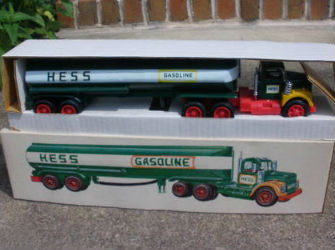
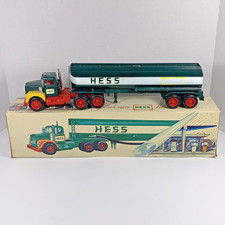
Home > Hess Trucks: 1974 Hess tanker truck

Hess Trucks:
1974 Hess tanker truck

1974 Hess tanker truck information
Historical overview
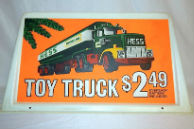
The 1974 Hess tanker truck continues the classic fuel-delivery theme that appears throughout the early Hess Toy Truck tradition. For collectors, it is often researched alongside nearby early-1970s releases because comparing year-to-year details is the easiest way to confirm identification and document variations consistently.
If you’re organizing research by decade, the best starting point is the checklist hub:
Hess Truck Checklist: 1970s.
For quick comparison, see the adjacent tanker page:
1972 Hess tanker truck.
For background on the series and its origins, see:
Hess Truck History and Leon Hess.
Features and play functions
The 1974 tanker is built around practical “working vehicle” play and display features that collectors also use as documentation points.
- Free-rolling wheels: Designed for tabletop play and easy positioning in a display lineup.
- Battery-powered lights: Lighting is a recurring feature in many early releases; document functionality and the battery compartment condition.
- Classic tanker configuration: Tractor-and-tanker trailer layout modeled after real fuel transport vehicles.
Design and construction
From a collector’s perspective, the most useful approach is to photograph and record consistent “checkpoints” that show originality and condition.
- Color scheme and markings: Confirm Hess branding and the clarity of lettering/decals across cab and tanker.
- Chrome details: Note the condition of bright chrome parts (often including the front ladder).
- Trailer support feet: Trailer feet shape is an easy-to-spot construction detail that can help separate similar tanker releases.
- Battery compartment: Inspect for corrosion or residue before testing lights; record what you find for your files.
For a consistent photo checklist across years, use:
Hess Truck Picture Guide.
Collectibility considerations
Collectors typically evaluate this year by completeness, originality, and documentation, especially because tanker designs can look similar across multiple releases.
- Condition: Photograph common wear points (edges, corners, and high-contact trailer areas).
- Original components: Note whether parts appear original and consistent (including chrome pieces and electrical components).
- Trailer stabilizers: Round stabilizers are associated with the 1972 and 1974 tanker releases, while earlier models from 1968–1969 used square stabilizers.
- Battery area documentation: The battery compartment condition is important for recordkeeping even if you don’t test the lights.
- Reference support: For collector references commonly used when researching multiple years, see
Hess Truck Books / Price Guide.
1974 Hess tanker truck – examples for sale
Listings can be helpful for comparing condition, completeness, and presentation. Use the identification points above (markings, chrome details, trailer support, and battery area) when reviewing photos.

Collector tips
- Photograph first: Capture all sides, the underside, close-ups of markings, and the battery compartment before any cleaning.
- Remove batteries for storage: Prevent leakage damage over time.
- Store to protect decals: Avoid pressure and rubbing against printed markings during storage.
- Compare by year: Keeping a consistent set of photos for adjacent releases makes long-term research easier.
Optional FAQ
What’s the best way to confirm I have the 1974 tanker?
Start with the tanker layout and Hess branding, then document chrome details, trailer support features, and the battery compartment. Comparing nearby pages helps:
1972
and
1975.
Other Hess trucks from the 1970s