Hess Trucks:
1972 Hess tanker truck

1972 Hess tanker truck information
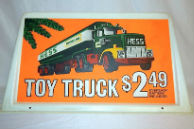
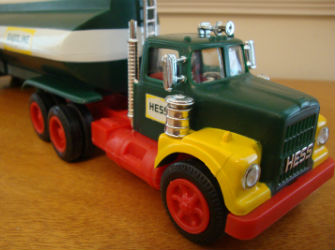
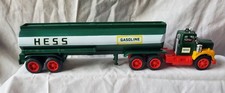
The 1972 Hess tanker truck returns the lineup to a fuel-delivery theme after the fire-truck releases of 1970 and 1971. For collectors, it’s an important early-1970s model because it continues the classic tractor-and-tanker format while introducing details that help distinguish it from late-1960s and mid-1970s tanker variations.
For broader context across the decade, start with the hub page:
Hess Truck Checklist: 1970s.
To compare nearby releases, see
1971 Hess fire truck
and
1974 Hess tanker truck.
1) Historical overview
Hess Toy Trucks began as a promotional tradition offered through Hess service stations, and by the early 1970s the lineup had expanded beyond tankers into specialty vehicles. The 1972 tanker signals a return to the fuel-transport style that collectors associate with the earliest years, while keeping the durable construction and interactive features that define the series.
For series-wide background, see
When Did the Hess Trucks Start?
and
Hess Truck History and Leon Hess.
2) Features and play functions
The 1972 tanker is designed as a working-style toy with features that are also useful identifiers when documenting a collection.
- Rolling action: Free-rolling wheels support display and tabletop play.
- Trailer configuration: A tractor paired with a fuel-style tanker trailer.
- Lighting function: Battery-powered lighting consistent with many Hess releases from this era.
3) Design and construction
When comparing similar Hess tankers, collectors often focus on small build details and hardware that can vary by year.
- Trailer support feet: The 1972 tanker is commonly identified by its round trailer feet (a change from earlier square-style feet).
- Finish and markings: Document the clarity of Hess branding and any striping/decals.
- Battery compartment: Photograph the compartment area and check for corrosion or residue.
4) Collectibility considerations
For collector documentation, the most helpful approach is to record completeness, originality, and the condition of high-wear or high-importance areas.
- Original components: Note any replaced parts, repainting, or non-original hardware.
- Electrics: Whether you test the lights or not, document the switch and battery area.
- High-wear areas: Corners, edges, trailer connection points, and wheel/axle areas.
- Reference support: Many collectors use printed references; see
Hess Truck Books / Price Guide.
1972 Hess tanker truck – examples for sale
Listings can help collectors compare condition, completeness, and presentation. Use the identification points above (especially trailer feet and lighting/battery condition) while browsing photos.

5) Collector tips
- Photograph first: Capture all sides, the underside, and close-ups of markings and trailer feet.
- Remove batteries: Prevent leakage damage during storage.
- Store properly: Keep in a stable, dry environment; see
How to Store Your Hess Trucks.
- Keep a comparison set: Bookmark the decade checklist and the year-by-year index for quick cross-checks:
List of Hess Trucks by Year.
6) Optional FAQ
What’s the quickest way to identify the 1972 Hess tanker truck?
Start with the tractor-and-tanker trailer layout, then document details like trailer feet shape, Hess markings, and the battery/lighting area. Comparing adjacent years often helps confirm you’re matching the correct release:
1971
and
1974.
Other Hess trucks from the 1970's