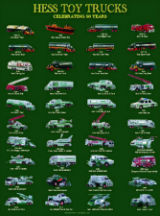
Hess Trucks:
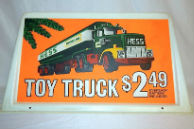
1964 Hess tanker trailer truck

1964 Hess tanker trailer information
The 1964 Hess tanker trailer truck is widely recognized as the first official Hess toy truck and the starting point for the annual series that followed. For collectors and researchers, this release is a key reference model because it establishes many early Hess design themes—realistic fuel-delivery styling, interactive play features, and a branded color scheme that remained familiar across decades.
To place 1964 in the broader series, the most useful hub is the
Hess Truck Checklist: 1960s.
For year-to-year comparison, the closest related release is the
1965 Hess tanker trailer truck,
followed by the thematic shift in
1966 Hess tanker ship Voyager.
1) Historical overview
The 1964 release is the foundational Hess Toy Truck. It was offered through Hess service stations and quickly became associated with holiday gift-giving. Because it is the earliest official model, it is frequently referenced when collectors discuss how the series started and how early promotional trucks were designed for both play and brand recognition.
Collectors often note that the original tanker-and-trailer concept was patterned after real Hess fuel-delivery rigs used at Hess service stations. Enthusiasts also point out that the cab styling is often compared to the classic Mack B-series trucks that were common in the 1950s, which helps explain the model’s realistic “working truck” proportions.
For background on the early timeline and the people behind the brand, see:
When Did the Hess Trucks Start?
and
Hess Truck History and Leon Hess.
2) Features and play functions
One reason the 1964 tanker remains so well known is its combination of practical play functions and realistic tanker-truck details. These features are also helpful identifiers when documenting or comparing examples.
- Fill-and-drain play: The tanker was designed to be filled using the original red funnel and emptied through a flexible black delivery hose.
- Working lights: Battery-powered headlights and taillights are controlled by a button or switch on the cab.
- Rolling action: The truck and trailer are built for rolling play and display.
The fill-and-drain feature is especially important because it is most closely shared with the
1965 tanker.
3) Design and construction
The 1964 tanker follows a classic tractor-and-tanker configuration modeled after real fuel delivery rigs. Collectors typically focus on the condition and originality of markings, the integrity of functional parts, and the state of the battery compartment.
- Branding and markings: Clear Hess lettering and intact striping/decals are key visual identifiers.
- Finish and wear: Common wear points include edges, corners, and the trailer connection area.
- Battery compartment: Located beneath the tanker; check for corrosion or residue and document condition for records.
- Accessories: Loose parts (funnel and related components) should be stored separately and photographed when present.
For guidance on photographing and documenting trucks consistently across years, see the
Hess Truck Picture Guide.
| Quick reference |
1964 model notes |
| Series role |
First official Hess Toy Truck release |
| Signature play feature |
Fill-and-drain tanker with hose (accessories commonly missing) |
| Common inspection areas |
Decals/lettering, battery compartment, wheels/axles, trailer connection |
| Best comparisons |
1965
and
1966
|
4) Collectibility considerations
Collectors typically evaluate the 1964 tanker with special attention to originality and completeness. Because it is the first release, documentation and condition notes are especially useful for long-term collecting and research.
- Completeness: Early accessories matter. Photograph and store loose parts separately to prevent damage.
- Original finish: Note paint wear and whether markings remain clear and intact.
- Electrics and battery area: Corrosion can affect function and display; photograph the compartment even if lights are not tested.
- Reference support: For print references used by many collectors, see
Hess Truck Books / Price Guide.
For a general collector reference page used across multiple years, see:
Hess Truck Value / Collector Reference.
1964 Hess tanker trailer truck – examples for sale
Collectors often browse listings to compare condition, completeness, and packaging. Use the identification details in the sections above to confirm model-year features while reviewing listings.

5) Collector tips
- Photograph before cleaning: Capture all sides, the underside, and close-ups of markings and the battery area.
- Remove old batteries: Prevent leakage-related damage during storage.
- Store accessories separately: Loose parts can rub paint or decals in storage.
- Use gentle cleaning: Avoid harsh cleaners that may lift decals or cloud plastic parts.
- Storage practices: Keep in a stable, dry environment away from direct sunlight; see
How to Store Your Hess Trucks.
6) Optional FAQ
Why is the 1964 Hess tanker trailer considered the first official Hess toy truck?
The 1964 tanker is widely referenced as the first official year in the annual Hess Toy Truck series and is used as the baseline for comparing later releases.
What features make the 1964 tanker unique in the early years?
It is closely associated with the early fill-and-drain tanker play feature and working lights, and it establishes the look and feel collectors connect with the earliest era of Hess trucks.
What’s the best way to explore other 1960s Hess trucks?
Use the
Hess checklist – 1960s
to browse the decade in a structured way, then compare adjacent years like
1965.
Other Hess truck from the 1960's