Hess Trucks:
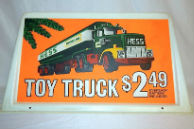
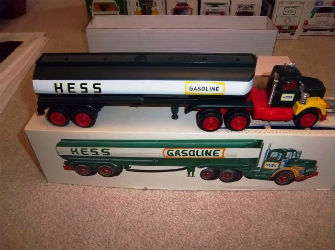
1968 Hess Amerada tanker truck

1968 Hess Amerada tanker truck information
The 1968 Hess Amerada tanker truck continues the early Hess Toy Truck fuel-delivery theme with a tractor and tanker trailer configuration. For collectors, it sits in the important late-1960s run where small packaging and production-era variations are commonly discussed alongside condition, completeness, and originality.
For quick context and cross-checking, start with the decade hub:
Hess Truck Checklist: 1960s.
Adjacent-year comparisons are also helpful:
1967 Hess tanker trailer truck
and
1969 Hess Amerada tanker truck.
1) Historical overview
Hess Toy Trucks began in the 1960s as a seasonal promotion offered through Hess service stations, and the early lineup emphasized real-world working vehicles and sturdy construction. The 1968 release remains part of that “classic” era, with a straightforward tanker-trailer presentation and interactive elements intended for hands-on play.
If you’re researching the broader origin story of the series, these site references provide background and timeline context:
When Did the Hess Trucks Start?
and
Hess Truck History and Leon Hess.
2) Features and play functions
Collectors often use functional features as quick identifiers, especially when comparing similar tanker-trailer releases from nearby years.
- Working lights: Early Hess trucks commonly use battery-powered lights controlled by an on/off switch.
- Fill-and-drain style play: Tanker-themed releases are frequently associated with “fuel delivery” play, often involving a hose/funnel accessory in the original set.
- Free-rolling wheels: A sturdy chassis and rolling wheels support display and gentle play.
3) Design and construction
The 1968 Amerada tanker follows a classic tractor-and-tanker trailer layout modeled after real fuel transport equipment. When documenting a specimen, collectors typically focus on clear branding, intact markings, and the condition of moving or electrical components.
- Branding and markings: Confirm that Hess markings are legible and consistent across the cab and trailer.
- Paint and wear: Examine edges, corners, and connection points where contact wear is common.
- Trailer connection: Check the coupling area and landing gear for stress, cracks, or repairs.
- Battery compartment: Inspect for corrosion or residue; document with photos for your records.
For photo documentation guidance that applies across many years, see:
Hess Truck Picture Guide.
| Reference point |
What to document |
| Key identifiers |
Tanker trailer configuration, Hess branding, lighting controls, accessory/“fuel delivery” details |
| High-check areas |
Decals/lettering, battery compartment, wheel/axle condition, trailer coupling and landing gear |
| Best comparisons |
1967
and
1969
|
4) Collectibility considerations
For a mid-to-late 1960s Hess release, the most useful collector notes are usually about originality, completeness, and careful documentation rather than assumptions about value.
- Completeness: If your truck includes accessories or original packaging, store them separately and document them clearly.
- Original finish: Note paint wear patterns and any touch-ups, replacements, or repairs.
- Electrical condition: Even if you don’t test lights, the battery area should be photographed and described.
- Reference support: Many collectors keep printed references for verification:
Hess Truck Books / Price Guide.
For a general collector reference page used across many years, see:
Hess Truck Value / Collector Reference.
1968 Hess Amerada tanker truck – examples for sale
Browsing multiple listings can help collectors compare condition, completeness, and presentation. Use the identifiers and documentation checklist above to confirm you’re matching the correct year and configuration while you browse.

5) Collector tips
- Photograph before cleaning: Capture all sides, underside, markings, and the battery area first.
- Remove old batteries: Prevent leakage damage during storage.
- Separate accessories: Loose parts can rub paint or decals in storage.
- Gentle cleaning only: Avoid harsh cleaners that can lift decals or haze plastic parts.
- Storage basics: Keep in a stable, dry environment away from direct sunlight:
How to Store Your Hess Trucks.
6) Optional FAQ
How can I verify I’m looking at the 1968 release and not a nearby year?
Start with the overall tractor-and-tanker configuration, then compare branding, lighting controls, and any included accessories. Using adjacent-year pages helps you confirm you’re matching the right model:
1967
and
1969.
Where can I confirm battery details for Hess trucks?
Battery configurations can differ by model. Confirm using the battery compartment and this reference:
Hess Battery Chart.
What’s the best hub for browsing many years quickly?
Use:
List of Hess Trucks by Year
and the
1960s checklist.
Other Hess trucks from the 1960's